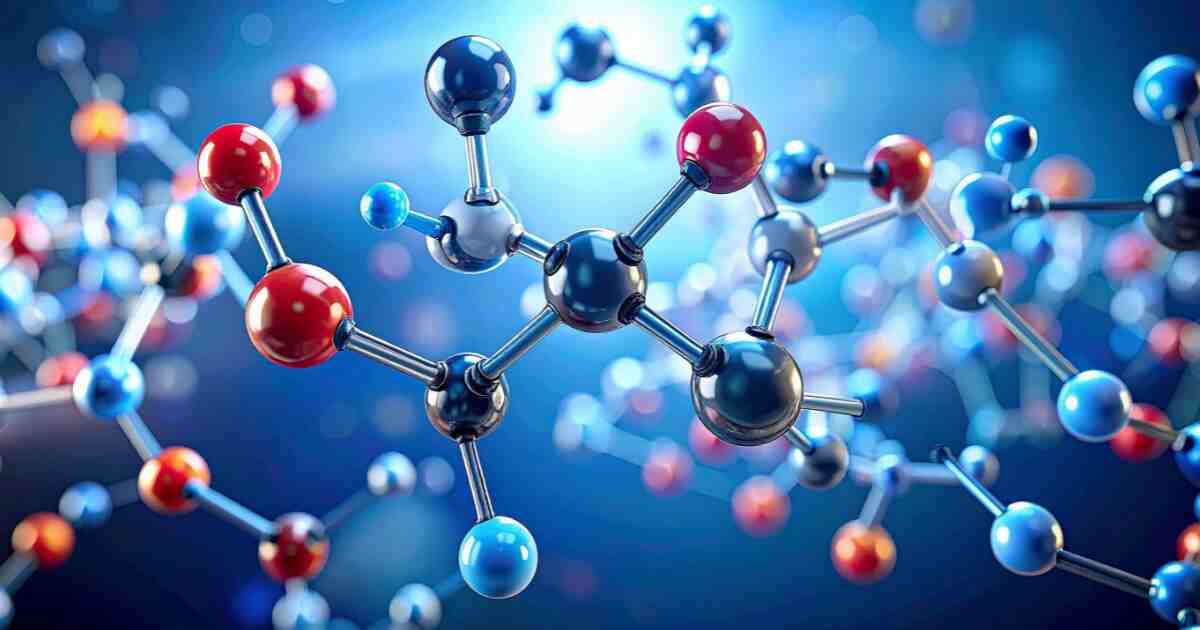
Everything around you – the air you are breathing, the water in your glass, the chair you are sitting on – is made of atoms. But very few of those atoms exist alone. Most of them are bonded together into molecules. Understanding the difference between atoms and molecules is the starting point for almost everything else in Chemistry, and once the distinction clicks it opens up the entire subject in a new way.
An atom is the smallest unit of a chemical element that retains the properties of that element. It cannot be broken down further by chemical means. A molecule is formed when two or more atoms are chemically bonded together. Molecules can be made of the same element or different elements. All molecules contain atoms, but not all atoms are part of molecules.
Difference Between Atom and Molecule: Comparison Table
| Feature | Atom | Molecule |
|---|---|---|
| Definition | Smallest unit of an element | Two or more atoms chemically bonded together |
| Can exist alone? | Yes, though rare in nature | Yes, as a stable unit |
| Made of | Protons, neutrons, electrons | Two or more atoms |
| Examples | H, O, C, Na, Fe | H2O, CO2, O2, NaCl |
| Size | Extremely small | Larger than a single atom |
| Chemical bonds | No bonds within a single atom | Held together by chemical bonds |
| Can be broken down chemically? | No, not by chemical means | Yes, bonds can be broken by chemical reactions |
What is an Atom?
An atom is the smallest particle of a chemical element that still has the properties of that element. If you took a piece of gold and kept cutting it in half, again and again, eventually you would reach a single gold atom. Cut any further and you would no longer have gold – you would have subatomic particles that have completely different properties.
Understanding the difference between atoms and molecules starts here, with the atom itself. Every molecule that exists is built from atoms, so grasping what an atom is and how it behaves is the essential first step in understanding the difference between atoms and molecules at a deeper level.
Every atom consists of three types of subatomic particles:
- Protons – positively charged particles found in the nucleus at the centre of the atom
- Neutrons – particles with no charge, also found in the nucleus
- Electrons – negatively charged particles that orbit the nucleus in shells
The number of protons in an atom determines which element it is. An atom with 1 proton is hydrogen. An atom with 6 protons is carbon. An atom with 79 protons is gold. This number is called the atomic number and it is what gives each element its unique identity.
In nature, most atoms do not exist in isolation. Noble gases like helium, neon, and argon are exceptions – their electron shells are already full, making them stable on their own. Most other atoms are reactive and will bond with other atoms to achieve stability, forming molecules or compounds.
What is a Molecule?
A molecule is formed when two or more atoms are joined together by chemical bonds. The atoms in a molecule can be the same element or different elements. What defines a molecule is that the atoms are held together in a specific arrangement by shared electrons.
This is the heart of the difference between atoms and molecules. Atoms are the individual units. Molecules are what those units become when they bond. The difference between atoms and molecules is not just a definition – it is the foundation of all Chemistry.
Molecules come in two broad categories:
- Molecules of elements – formed when atoms of the same element bond together. Oxygen gas (O2) consists of two oxygen atoms bonded together. Nitrogen gas (N2) consists of two nitrogen atoms. Ozone (O3) consists of three oxygen atoms
- Molecules of compounds – formed when atoms of different elements bond together. Water (H2O) consists of two hydrogen atoms and one oxygen atom. Carbon dioxide (CO2) consists of one carbon atom and two oxygen atoms. Glucose (C6H12O6) consists of carbon, hydrogen, and oxygen atoms
The properties of a molecule can be completely different from the properties of the individual atoms that make it up. Hydrogen gas is highly flammable. Oxygen gas supports combustion. But when they combine to form water, the result is a liquid that puts fires out. The combination creates something entirely new.
Example 1 – Water (H2O):
A water molecule consists of two hydrogen atoms and one oxygen atom bonded together. Hydrogen on its own is a flammable gas. Oxygen on its own supports combustion. Together as H2O they form a liquid with completely different properties from either atom alone. Every glass of water you drink contains an almost incomprehensible number of water molecules, each made of those same two types of atom bonded in the same way.
Example 2 – Oxygen gas (O2):
The oxygen you breathe is not single oxygen atoms. It is oxygen molecules, each made of two oxygen atoms bonded together. Single oxygen atoms are highly reactive and unstable. By bonding in pairs, oxygen achieves stability. This is why oxygen in the atmosphere exists as O2 rather than as individual O atoms. It is a molecule made of identical atoms.
Example 3 – Carbon dioxide (CO2):
When you breathe out, you exhale carbon dioxide molecules. Each CO2 molecule consists of one carbon atom bonded to two oxygen atoms. Carbon on its own is a solid (like coal or graphite). Oxygen on its own is a gas. Together as CO2 they form a gas that plants use for photosynthesis. The molecule has properties neither atom has individually.
Example 4 – Table salt (NaCl):
Table salt is sodium chloride, made of sodium atoms and chlorine atoms bonded together. Sodium on its own is a highly reactive metal that explodes violently when it touches water. Chlorine on its own is a toxic green gas. But bonded together as NaCl they form a stable white solid that you sprinkle on your food. This is one of the most dramatic examples of how bonding transforms the properties of individual atoms.
Example 5 – Diamond and graphite (Carbon atoms):
Both diamond and graphite are made entirely of carbon atoms. But they have completely different structures and properties because the atoms are bonded differently. In diamond, each carbon atom bonds to four others in a rigid three-dimensional lattice, making it the hardest natural material on Earth. In graphite, carbon atoms form flat layers that slide over each other easily, which is why graphite is used in pencils. Same atoms, different bonding, completely different properties.
Example 6 – Glucose (C6H12O6):
Glucose is the sugar your cells use for energy. Each glucose molecule contains 6 carbon atoms, 12 hydrogen atoms, and 6 oxygen atoms bonded together in a specific arrangement. The way those atoms are arranged and bonded is what makes glucose glucose rather than some other compound with the same atoms in a different arrangement. Molecular structure matters as much as atomic composition.
Alone and together:
Atom = Alone. An atom is the individual unit, the single particle of an element standing on its own.
Molecule = Merged. A molecule is what you get when atoms merge together through chemical bonds.
Think of atoms as individual people and molecules as groups of people holding hands. Each person (atom) has their own identity. When they hold hands (bond), they form a group (molecule) that behaves differently from any of them alone. You need the individuals to make the group, but the group is something new.
Quick Quiz: Atom or Molecule?
1. A single particle of the element gold (Au) is:
2. A water particle (H2O) consisting of two hydrogen atoms and one oxygen atom is:
3. Oxygen gas (O2) consists of two oxygen atoms bonded together. It is:
4. The number of protons in an atom determines:
5. Table salt (NaCl) is made of sodium and chlorine atoms bonded together. It is:
6. Which of these is an atom rather than a molecule?
Difference Between Atom and Molecule in Exams
The difference between atom and molecule is tested at KS3, GCSE, and A-Level Chemistry. Questions typically ask you to define each term, give examples, explain the difference between molecules of elements and molecules of compounds, and describe the structure of specific molecules. At GCSE you also need to understand how atoms bond to form molecules and why the properties of molecules differ from the properties of their constituent atoms. Always use correct chemical formulae in your answers when naming molecules – writing H2O rather than “water molecule” shows the examiner you understand the atomic composition.
Being precise about the difference between atom and molecule in your answers will always impress examiners. Use correct chemical formulae, name the specific atoms involved, and explain why bonding produces molecules with different properties from their constituent atoms.
Common Mistakes to Avoid
Thinking molecules must contain different elements:
A molecule can be made of atoms of the same element. O2 (oxygen gas), N2 (nitrogen gas), H2 (hydrogen gas), and O3 (ozone) are all molecules made of just one element. What defines a molecule is that two or more atoms are bonded together, not that those atoms must be different.
Confusing atoms with elements:
An element is a substance made of only one type of atom. An atom is the individual particle. Carbon is an element. A carbon atom is a single particle of that element. You would say “carbon is an element” and “a carbon atom has 6 protons” – not interchangeably.
Forgetting that molecules can be broken down chemically:
Unlike atoms, which cannot be broken down by chemical reactions, molecules can be. Water molecules can be split into hydrogen and oxygen by electrolysis. This is the basis of many chemical reactions. Atoms themselves, however, can only be split by nuclear reactions, which is a completely different process from chemistry.
Frequently Asked Questions
What is the difference between a molecule and a compound?
A compound is a substance made of two or more different elements chemically bonded together. All compounds are molecules, but not all molecules are compounds. O2 is a molecule but not a compound because it contains only one element. H2O is both a molecule and a compound because it contains two different elements. The distinction matters in Chemistry exams so it is worth being precise about which term applies.
How small is an atom?
Atoms are almost impossibly small. A single hydrogen atom has a diameter of about 0.1 nanometres, which is 0.0000001 millimetres. A single full stop on this page contains roughly 250 billion carbon atoms side by side. Despite their tiny size, atoms are themselves mostly empty space. If an atom were the size of a football stadium, the nucleus would be about the size of a pea in the centre, with the electrons orbiting somewhere in the outer stands.
Can atoms exist on their own?
Most atoms are too reactive to exist in isolation for long. They quickly bond with other atoms to achieve a more stable electron configuration. Noble gases are the main exception. Helium, neon, argon, krypton, xenon, and radon all have full outer electron shells, which makes them stable and unreactive. They exist as single atoms rather than molecules, which is why they are sometimes called monatomic gases.
What holds atoms together in a molecule?
Chemical bonds hold atoms together in molecules. The most common type at GCSE level is the covalent bond, where two atoms share electrons between them. Both atoms benefit from the shared electrons, which fills their outer shells and makes them more stable. Ionic bonds work differently, involving the transfer of electrons from one atom to another, creating oppositely charged ions that attract each other. Both types of bond are strong enough to hold molecules together under normal conditions.
For a deeper understanding of atomic structure and bonding, visit Khan Academy: Atomic Structure and Properties.
If you are studying Chemistry at GCSE you will also find it useful to read about the difference between photosynthesis and respiration, which explores how molecules like glucose and oxygen are used and produced by living things.
The difference between atoms and molecules is the difference between the individual building block and the structure it forms. Atoms are the letters of the chemical alphabet. Molecules are the words those letters spell. And just as different arrangements of the same letters can spell completely different words with completely different meanings, different arrangements of the same atoms can produce molecules with completely different properties. Once you see Chemistry through that lens, the difference between atoms and molecules becomes not just a definition to memorise but a framework for understanding everything the subject throws at you.
The difference between atom and molecule is one of those foundational Chemistry concepts that keeps coming back throughout your studies. Every time you write a chemical formula, balance an equation, or describe a reaction, you are working with the difference between atom and molecule whether you realise it or not. The clearer your understanding of the difference between atom and molecule, the more confidently you will approach every Chemistry topic that builds on it, from bonding and structure to chemical reactions and the periodic table.
