In 2011, an earthquake struck off the coast of Japan with a magnitude of 9.0. The shaking lasted six minutes and triggered a tsunami that killed nearly 20,000 people. Japan sits on one of the most volcanically and seismically active regions on Earth, and understanding why requires knowing exactly what earthquakes and volcanoes are, how they form, and crucially, why they happen in the same places. The difference between earthquake and volcano goes deeper than one shakes and one erupts. They are products of the same restless planet, but they work in completely different ways.
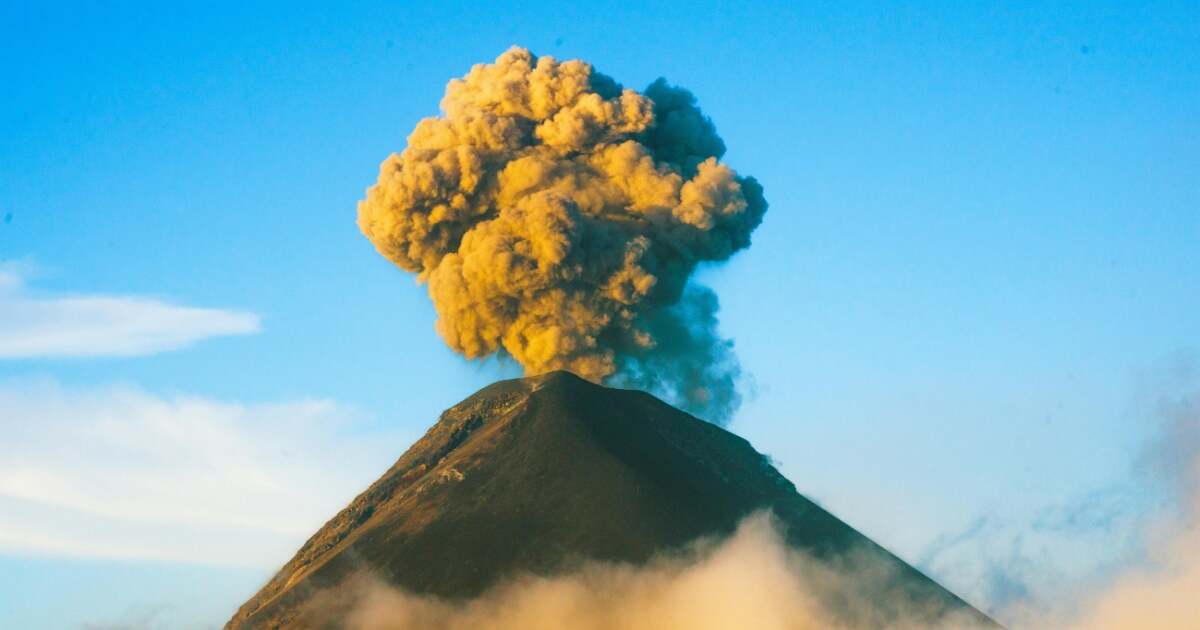
An earthquake is a sudden shaking of the ground caused by the movement of tectonic plates or the release of stress along fault lines. It releases energy in the form of seismic waves. A volcano is an opening in the Earth’s crust through which magma, ash, and gases escape from below the surface. Earthquakes are about ground movement. Volcanoes are about material escaping from inside the Earth. Both are caused by tectonic activity but through different mechanisms.
Difference Between Earthquake and Volcano: Comparison Table
| Feature | Earthquake | Volcano |
|---|---|---|
| Definition | Sudden shaking of the ground from tectonic movement | Opening in the crust through which magma escapes |
| What it releases | Seismic energy and ground movement | Magma, ash, gases, and lava |
| Cause | Movement or rupture along fault lines | Magma forcing its way through the crust |
| Warning signs | Often little or no warning | Can be monitored days or weeks in advance |
| Duration | Seconds to minutes | Hours, days, weeks, or even years |
| Landforms created | Fault scarps, changed landscapes, tsunamis | Volcanic mountains, calderas, lava fields |
| Where they occur | Along plate boundaries and fault lines | Along plate boundaries and hot spots |
| Measured by | Richter scale or moment magnitude scale | Volcanic Explosivity Index (VEI) |
What is an Earthquake?
An earthquake is a sudden, violent shaking of the ground that occurs when energy stored in the Earth’s crust is released suddenly. This energy builds up over time as tectonic plates move against each other, creating stress along fault lines. When that stress becomes too great for the rock to hold, it ruptures and releases the stored energy as seismic waves that travel through the Earth and shake the surface.
The point underground where the earthquake originates is called the focus or hypocentre. The point on the surface directly above the focus is called the epicentre. This is where shaking is usually most intense. Seismic waves radiate outward from the epicentre in all directions, weakening with distance.
There are three main types of seismic waves:
- P-waves (Primary waves) – the fastest waves, which compress and expand the rock as they travel. They can travel through solid rock and liquid and are the first to be detected by seismometers
- S-waves (Secondary waves) – slower than P-waves, these shake the ground from side to side and up and down. They cannot travel through liquid, which is how scientists know the Earth’s outer core is liquid
- Surface waves – the slowest but most destructive waves, travelling along the Earth’s surface and causing most of the damage during an earthquake
Earthquakes are measured using the moment magnitude scale. Each whole number increase represents roughly 32 times more energy released. A magnitude 7 earthquake releases 32 times more energy than a magnitude 6. The 2011 Japan earthquake at magnitude 9.0 released more energy than all the world’s nuclear weapons combined.
What is a Volcano?
A volcano is an opening or vent in the Earth’s crust through which molten rock (magma), volcanic ash, and gases escape from deep within the Earth. When magma reaches the surface it is called lava. Over time, repeated eruptions build up layers of solidified lava and ash, forming the distinctive cone-shaped volcanic mountains most people picture when they think of a volcano.
Volcanoes form in three main settings:
- Destructive plate boundaries – where one plate is forced beneath another (subduction). The subducting plate melts and the magma rises through the overlying plate. The volcanoes of the Andes and Mount Fuji in Japan formed this way
- Constructive plate boundaries – where plates move apart and magma rises to fill the gap. Iceland sits on the Mid-Atlantic Ridge and is almost entirely volcanic for this reason
- Hot spots – where a plume of exceptionally hot magma rises from deep in the mantle, burning through the crust regardless of plate boundary position. The Hawaiian Islands formed over a hot spot as the Pacific Plate moved slowly over it
Volcanoes vary enormously in their behaviour. Shield volcanoes like those in Hawaii produce runny basaltic lava that flows slowly and covers large areas. Composite volcanoes like Mount Vesuvius produce thick, viscous lava and can erupt explosively with devastating force. The explosivity of a volcano depends largely on the silica content and gas content of its magma.
Why Do Earthquakes and Volcanoes Occur in the Same Places?
Both earthquakes and volcanoes are driven by tectonic plate movement, which is why they tend to cluster in the same regions of the world. The Pacific Ring of Fire is the most dramatic example. This horseshoe-shaped zone around the Pacific Ocean accounts for approximately 90% of the world’s earthquakes and contains 75% of the world’s active volcanoes.
However there are differences in exactly where each hazard concentrates. Volcanoes are most common at constructive boundaries and subduction zones, and at hot spots. Earthquakes occur at all three types of plate boundary — constructive, destructive, and conservative — since all three involve plate movement that can create stress and rupture. Conservative boundaries like the San Andreas Fault produce powerful earthquakes but virtually no volcanic activity because no magma is generated when plates slide past each other.
Example 1 – The 2011 Tohoku Earthquake, Japan:
On 11 March 2011, a magnitude 9.0 earthquake struck off the Pacific coast of Japan at a destructive plate boundary where the Pacific Plate subducts beneath the North American Plate. The earthquake lasted approximately six minutes and triggered a devastating tsunami with waves reaching up to 40 metres in some areas. Nearly 20,000 people died and the Fukushima nuclear power plant was severely damaged. This earthquake was caused by plate movement, not volcanic activity, even though Japan also has many active volcanoes.
Example 2 – Mount Pinatubo, Philippines (1991):
The 1991 eruption of Mount Pinatubo in the Philippines was the second largest volcanic eruption of the 20th century. It ejected so much ash and sulphur dioxide into the atmosphere that it temporarily lowered global temperatures by about 0.5 degrees Celsius. Pinatubo sits on a destructive plate boundary where the Eurasian Plate is being subducted. The eruption was preceded by weeks of warning signs including small earthquakes and gas emissions, allowing most people to evacuate in time.
Example 3 – Iceland (Both):
Iceland sits on the Mid-Atlantic Ridge, a constructive plate boundary where the North American and Eurasian plates are moving apart. This makes Iceland both highly volcanic and seismically active. The country experiences frequent small earthquakes as the plates separate and regular volcanic eruptions as magma fills the gap. The 2010 eruption of Eyjafjallajokull disrupted European air travel for weeks. Iceland is one of the clearest real-world examples of how earthquakes and volcanoes share the same tectonic cause.
Example 4 – The San Andreas Fault, California:
The San Andreas Fault is a conservative plate boundary where the Pacific Plate and the North American Plate slide horizontally past each other. It produces some of the world’s most significant earthquakes, including the devastating 1906 San Francisco earthquake. However because no subduction occurs and no magma is generated, there are virtually no volcanoes along the San Andreas Fault. This illustrates a key difference: earthquakes can occur at all plate boundaries but volcanoes require magma generation.
Example 5 – Hawaii (Volcanoes without major earthquakes):
The Hawaiian Islands formed over a hot spot in the middle of the Pacific Plate, far from any plate boundary. Hawaii has some of the world’s most active volcanoes, including Kilauea which has been erupting almost continuously since 1983. However because it is not at a plate boundary, the major earthquake hazard present at boundary zones is much reduced. Hawaii experiences volcanic activity without the same earthquake risk that boundary zones face. This shows that volcanoes and earthquakes, while often found together, do not always occur in identical locations.
Example 6 – Pompeii, Italy (79 AD):
The eruption of Mount Vesuvius in 79 AD buried the Roman city of Pompeii under metres of volcanic ash and pumice, preserving it almost perfectly for nearly 2,000 years. Vesuvius sits on a destructive plate boundary where the African Plate is being subducted beneath the Eurasian Plate. The eruption happened with relatively little warning and killed thousands of people. Pompeii remains one of the most studied volcanic disasters in history and a powerful reminder of the destructive force of composite volcanoes.
Shake and escape:
Earthquake = the Earth shakes. Energy stored in rocks is released suddenly, shaking everything above it. Nothing escapes from inside the Earth. The ground just moves.
Volcano = material escapes from inside the Earth. Magma, gas, and ash force their way through a vent to the surface. The ground does not shake — something comes out of it.
Think of it this way: an earthquake is like someone shaking a table. A volcano is like a bottle of fizzy drink being opened. Both involve enormous energy being released, but one shakes what is already there and the other pushes something out from inside.
Quick Quiz: Earthquake or Volcano?
1. Seismic waves travel outward from a point underground called the focus. This is a feature of:
2. Magma forces its way through a vent in the Earth’s crust and flows as lava. This is:
3. The San Andreas Fault produces powerful earthquakes but almost no volcanoes. Why?
4. Hawaii has active volcanoes but sits in the middle of a tectonic plate. What causes this?
5. Which scale is used to measure the magnitude of an earthquake?
6. Iceland experiences both frequent earthquakes and volcanic eruptions. This is because it sits on:
Difference Between Earthquake and Volcano in Exams
The difference between earthquake and volcano is tested directly in GCSE Geography under the tectonic hazards topic. Exam questions typically ask you to explain how each hazard forms, describe the effects of a named earthquake or volcanic eruption, compare the two hazards in terms of predictability and management, and explain why both tend to occur at plate boundaries. Always use named case studies with specific dates and figures. Vague answers without specific examples rarely score above the lower mark bands.
One of the most common exam questions asks you to compare the predictability of earthquakes and volcanoes. Volcanoes can often be monitored and predicted days or weeks in advance through ground deformation, increased seismic activity, and gas emissions. Earthquakes give far less warning and remain one of the most difficult natural hazards to predict accurately. This difference in predictability is a favourite comparison question at GCSE level.
Common Mistakes to Avoid
Saying earthquakes and volcanoes always occur together:
While both are linked to tectonic activity, they do not always occur in exactly the same locations. Conservative boundaries produce earthquakes but not volcanoes. Hot spots produce volcanoes but fewer major earthquakes. Always be precise about which plate boundary type produces which hazard.
Confusing magma and lava:
Magma is molten rock while it is still underground. Lava is the same material once it reaches the surface. This distinction is frequently tested and frequently got wrong. In an exam answer, always use magma for underground and lava for surface.
Forgetting that earthquakes can trigger other hazards:
Major earthquakes can trigger tsunamis (as in Japan 2011), landslides, and even volcanic activity. The hazard does not end with the shaking. Secondary hazards are often as deadly as the original earthquake and examiners will credit answers that acknowledge this.
Frequently Asked Questions
Can an earthquake trigger a volcanic eruption?
Yes, though the relationship is complex. Large earthquakes can destabilise magma chambers beneath volcanoes and trigger eruptions. The 1960 Chilean earthquake, the largest ever recorded at magnitude 9.5, was followed by volcanic activity in the region. However the reverse is also true — volcanic activity produces small earthquakes as magma forces its way through rock. In tectonically active regions, earthquakes and volcanic eruptions are closely interrelated rather than completely separate events.
Why can volcanoes be predicted but earthquakes cannot?
Volcanoes give warning signs as magma moves upward through the crust. Scientists can monitor ground deformation using GPS sensors, measure increases in sulphur dioxide gas emissions, and detect the small earthquakes that occur as magma fractures rock on its way up. These signals often give days or weeks of warning. Earthquakes happen when stress on a fault line is suddenly released, which happens too rapidly and unpredictably to forecast with any reliability. Scientists can identify high-risk fault zones but cannot predict exactly when a rupture will occur.
What is the Ring of Fire?
The Ring of Fire is a horseshoe-shaped zone around the Pacific Ocean where approximately 90% of the world’s earthquakes occur and 75% of the world’s active volcanoes are found. It follows the edges of the Pacific Plate as it collides with and subducts beneath surrounding plates. Countries along the Ring of Fire include Japan, the Philippines, Indonesia, New Zealand, Chile, and the western United States. The extraordinary concentration of tectonic hazards in this region makes it the most geologically active area on Earth.
Which is more dangerous, an earthquake or a volcano?
This depends heavily on the specific event, its location, and the preparedness of the affected population. Earthquakes kill more people overall because they strike with little warning and can affect densely populated urban areas. The 2010 Haiti earthquake killed over 200,000 people. However volcanic eruptions can be catastrophic on a global scale. The 1815 eruption of Mount Tambora in Indonesia killed around 70,000 people directly and caused the “Year Without a Summer” in 1816 through volcanic winter, leading to crop failures and famine that may have killed over a million people worldwide. Neither hazard is universally more dangerous than the other.
For more on tectonic hazards and plate boundaries, visit National Geographic: Plate Tectonics.
This topic connects directly to other Geography guides on this site. Reading about the difference between plate tectonics and continental drift will give you the essential background for understanding why earthquakes and volcanoes occur where they do, and the guide on erosion and deposition shows how tectonic processes connect to the surface processes that shape landscapes.
The difference between earthquake and volcano is ultimately the difference between energy being released and material escaping. Both are expressions of a planet that is constantly moving and changing beneath our feet. Understanding the difference between earthquake and volcano not only helps you in Geography exams but gives you the tools to make sense of news about natural disasters anywhere in the world. The next time you read about a tectonic event, you will know exactly what is happening and why.
