Look at a world map and you will notice something striking. The eastern coastline of South America and the western coastline of Africa look like they could fit together like puzzle pieces. That observation haunted scientists for centuries before anyone could explain it. The theories of continental drift and plate tectonics emerged decades apart and together tell one of the greatest stories in the history of science. Understanding the difference between plate tectonics and continental drift is not just about passing a Geography exam. It is about understanding how the ground beneath your feet has been moving for billions of years.
Continental drift is the theory, proposed by Alfred Wegener in 1912, that the continents were once joined together in a single landmass and have slowly moved apart over millions of years. Plate tectonics is the scientific theory that explains how and why this movement happens. It describes the Earth’s outer shell as being divided into large plates that move due to convection currents in the mantle below. Continental drift is the observation that continents move. Plate tectonics is the explanation for why they move.
Difference Between Plate Tectonics and Continental Drift: Comparison Table
| Feature | Continental Drift | Plate Tectonics |
|---|---|---|
| Proposed by | Alfred Wegener, 1912 | Developed through 1950s to 1970s by multiple scientists |
| What it describes | The movement of continents over time | The mechanism that drives all movement of the Earth’s crust |
| Explains the cause? | No, Wegener could not explain what moved the continents | Yes, convection currents in the mantle drive plate movement |
| Scale | Focuses on continents | Focuses on tectonic plates, which include ocean floors |
| Evidence used | Coastline fit, fossil records, rock types | All of Wegener’s evidence plus seafloor spreading, paleomagnetism |
| Scientific acceptance | Initially rejected by most scientists | Now universally accepted scientific theory |
| Relationship | Continental drift is part of what plate tectonics explains | Plate tectonics is the complete theory that includes continental drift |
What is Continental Drift?
Continental drift is the theory that the continents have not always been in their current positions but have moved slowly across the Earth’s surface over hundreds of millions of years. The theory was developed by German meteorologist Alfred Wegener, who published it in 1912.
Understanding continental drift is the starting point for grasping the difference between plate tectonics and continental drift as a whole.
Wegener noticed that the continents appeared to fit together like a jigsaw puzzle, particularly the coastlines of South America and Africa. He gathered an impressive body of evidence to support his idea:
- The jigsaw fit – the coastlines of South America and Africa match remarkably well when moved together
- Fossil evidence – identical fossils of the same plants and animals have been found on continents now separated by thousands of kilometres of ocean. Mesosaurus, a freshwater reptile, was found in both Brazil and South Africa. It could not have swum across the Atlantic
- Rock types – matching rock formations and mountain ranges that align when the continents are moved back together, as if they were once part of the same geological structures
- Climate evidence – coal deposits (formed in tropical forests) found in Antarctica, and evidence of glaciation found in tropical Africa, suggesting these regions were once in different climate zones
Despite this compelling evidence, Wegener’s theory was largely rejected by the scientific community during his lifetime. The main reason was that he could not explain the mechanism. He knew the continents had moved but could not say what force was powerful enough to push entire continents through solid ocean rock. Wegener died in 1930, never having seen his theory accepted.
What is Plate Tectonics?
Plate tectonics is the comprehensive scientific theory that describes the structure of the Earth’s outer shell and explains all the major geological features and events on its surface, from earthquakes and volcanoes to the formation of mountains and ocean trenches.
The theory describes the Earth’s lithosphere (the crust and upper mantle) as being divided into approximately 15 major tectonic plates and several smaller ones. These plates float on the semi-molten asthenosphere below and move continuously, driven by convection currents in the mantle.
Plate tectonics solved the problem that defeated Wegener. The mechanism driving plate movement is convection in the mantle. Heat from the Earth’s core causes molten rock in the mantle to rise, spread out, cool, and sink back down in giant circulation cells. This movement drags the tectonic plates above it, causing them to move a few centimetres per year.
The three types of plate boundary and what happens at each:
- Constructive boundaries – plates move apart, magma rises to fill the gap, creating new ocean floor. The Mid-Atlantic Ridge is a constructive boundary, causing Iceland to grow slightly each year
- Destructive boundaries – plates collide. The denser plate (usually oceanic) is subducted beneath the lighter one (usually continental), melting back into the mantle and forming volcanoes and deep ocean trenches. The Andes mountains formed this way
- Conservative boundaries – plates slide past each other horizontally. No crust is created or destroyed but enormous friction builds up, causing powerful earthquakes. The San Andreas Fault in California is a conservative boundary
How Continental Drift Led to Plate Tectonics
Wegener’s continental drift theory was the crucial first step, but the evidence that finally convinced scientists came in the 1950s and 1960s from the ocean floor.
Harry Hess proposed seafloor spreading in 1960, suggesting that new ocean floor was constantly being created at mid-ocean ridges as magma rose and solidified. Evidence came from paleomagnetism — the discovery that the magnetic orientation of rocks on either side of mid-ocean ridges was symmetrical, like a tape recording of the Earth’s magnetic reversals spreading outward from the ridge.
This seafloor spreading provided the mechanism Wegener had been unable to identify. Continents were not pushing through ocean rock at all. They were riding on tectonic plates that were being driven by convection currents below. Plate tectonics unified continental drift, seafloor spreading, and earthquake and volcano distribution into one comprehensive theory.
Example 1 – Pangaea:
About 300 million years ago, all the continents were joined together in a single supercontinent called Pangaea. Continental drift theory, confirmed by plate tectonics, explains how Pangaea broke apart and the continents gradually moved to their current positions. The Atlantic Ocean did not exist 200 million years ago. It formed as North America and Europe separated, and it continues to widen by about 2.5 centimetres per year.
Example 2 – The Himalayas:
The Himalayas, the world’s highest mountain range, formed because the Indian tectonic plate has been moving northward and colliding with the Eurasian plate for around 50 million years. As both plates are continental and neither can subduct easily, the collision has forced rock upward, creating the Himalayas. The range continues to grow by about 5mm per year as the collision continues. This is plate tectonics in action at the largest scale.
Example 3 – Iceland:
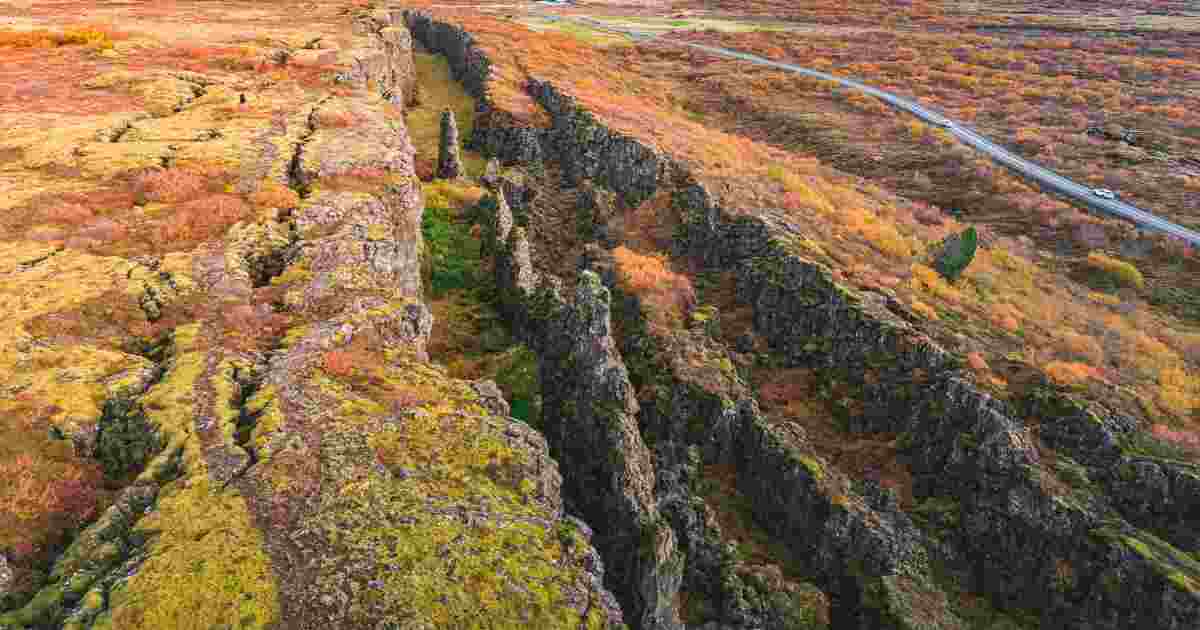
Iceland sits directly on the Mid-Atlantic Ridge, a constructive plate boundary where the North American and Eurasian plates are moving apart. New rock is constantly being created as magma rises to fill the gap, making Iceland one of the most volcanically active places on Earth. Iceland is effectively growing wider every year as the plates separate. The island is a living demonstration of the constructive boundary process described by plate tectonics.
Example 4 – The 2011 Japan earthquake:
The devastating Tohoku earthquake of March 2011, which triggered a tsunami that killed nearly 20,000 people, occurred at a destructive plate boundary where the Pacific Plate is being subducted beneath the North American Plate off the coast of Japan. Japan experiences frequent earthquakes and has numerous volcanoes precisely because it sits at the junction of several tectonic plates. Plate tectonics explains why Japan is one of the most seismically active countries on Earth.
Example 5 – Fossil evidence connecting continents:
The fossil of Glossopteris, a tree fern, has been found in Antarctica, Australia, South America, Africa, and India. These continents are now separated by vast oceans. Glossopteris seeds could not have crossed those oceans. The only explanation is that these continents were once joined. This fossil evidence was central to Wegener’s continental drift theory and remains one of the most compelling pieces of evidence for the movement of continents as described by plate tectonics.
Example 6 – The San Andreas Fault:
The San Andreas Fault runs for about 1,300 kilometres through California, where the Pacific Plate and the North American Plate slide horizontally past each other. Los Angeles sits on the Pacific Plate while San Francisco sits on the North American Plate. The two cities are moving towards each other at about 5cm per year. In around 15 million years, Los Angeles will be where San Francisco is today. This conservative boundary demonstrates plate movement at a human scale.
What and why:
Continental drift = the What. What happened? The continents drifted apart. Wegener saw the evidence of movement but could not explain what caused it.
Plate tectonics = the Why. Why did it happen? Because tectonic plates are driven by convection currents in the mantle. Plate tectonics provides the complete explanation.
Think of it like this: continental drift is the symptom and plate tectonics is the diagnosis. Wegener described the symptoms brilliantly. Later scientists provided the diagnosis that explained everything.
Quick Quiz: Continental Drift or Plate Tectonics?
1. Alfred Wegener noticed that the coastlines of South America and Africa appeared to fit together. This observation supported:
2. Convection currents in the mantle drive the movement of the Earth’s lithospheric plates. This is explained by:
3. The Himalayas formed because two continental plates collided. This is explained by:
4. Identical fossils of Mesosaurus found in both Brazil and South Africa support:
5. Iceland sits on a constructive plate boundary where two plates are moving apart. This is explained by:
6. Wegener’s theory was initially rejected because he could not explain:
Difference Between Plate Tectonics and Continental Drift in Exams
The difference between plate tectonics and continental drift is tested in GCSE Geography and Combined Science. Questions typically ask you to describe Wegener’s theory and the evidence he used, explain why it was initially rejected, describe how plate tectonics developed from continental drift, explain the mechanism of plate movement, and describe what happens at each type of plate boundary. Always use specific named examples like the Himalayas, Iceland, the San Andreas Fault, and the Mid-Atlantic Ridge to support your answers.
Common Mistakes to Avoid
Saying continental drift and plate tectonics are the same thing:
They are related but distinct. Continental drift is Wegener’s original observation and theory about moving continents. Plate tectonics is the more complete and comprehensive theory that came later, incorporating continental drift but also explaining the mechanism and covering ocean floor movement, earthquakes, and volcanoes. Continental drift is part of what plate tectonics explains.
Thinking Wegener was wrong:
Wegener was essentially correct that the continents had moved. He was simply unable to explain the mechanism. The scientific community rejected his theory not because his observations were wrong but because he could not answer the crucial question of what force could move continents. When that mechanism was identified through seafloor spreading evidence in the 1960s, his core idea was vindicated.
Confusing the types of plate boundary:
Constructive boundaries create new crust and move apart. Destructive boundaries collide and one plate is subducted. Conservative boundaries slide past each other. These are three completely different processes with different outcomes. Getting them confused is one of the most common errors in GCSE Geography exam answers about plate tectonics.
Frequently Asked Questions
Why was Wegener’s continental drift theory rejected?
Wegener’s theory was rejected primarily because he could not identify a mechanism powerful enough to move continents through solid rock. The scientific establishment at the time, particularly geologists and geophysicists, found the idea physically impossible given the understanding of Earth’s structure available in 1912. Wegener was also a meteorologist rather than a geologist, which meant his ideas were not taken as seriously within the geological community as they might otherwise have been.
What evidence finally proved plate tectonics?
The decisive evidence came from the ocean floor in the 1950s and 1960s. Seafloor spreading, identified by Harry Hess, showed that new ocean floor was being continuously created at mid-ocean ridges. Paleomagnetism provided the proof: the magnetic orientation of rocks on either side of mid-ocean ridges forms mirror image patterns, like a recording of the Earth’s magnetic reversals. This symmetrical pattern could only be explained by new ocean floor being created at the ridge and spreading outward in both directions, confirming that the ocean floor and the continents above it were constantly moving.
How fast do tectonic plates move?
Tectonic plates move at speeds roughly comparable to the rate at which fingernails grow, between 1 and 15 centimetres per year depending on the plate. The fastest moving plate is the Australian plate at around 7 centimetres per year. Over millions of years these small movements accumulate into the enormous continental shifts that have shaped Earth’s geography. In the time it takes you to read this sentence, the Pacific Plate has moved by about half a millimetre.
Will the continents join together again?
Yes, according to geological projections. In approximately 250 million years, the continents are predicted to come together again into a new supercontinent, sometimes called Pangaea Ultima or Amasia depending on the model. The Atlantic Ocean is currently widening, but the Pacific Ocean is shrinking as the Pacific Plate is subducted. Eventually the Americas will collide with Asia and the continents will form a new supercontinent. The cycle of supercontinent formation and breakup, called the Wilson Cycle, has happened multiple times in Earth’s history.
For more on plate tectonics and Earth’s structure, visit BBC Bitesize Geography: Tectonic Hazards.
Plate tectonics connects naturally to other Geography topics on this site. Reading about the difference between weathering and erosion will show you how the landscapes created by plate movement are gradually shaped and worn down by surface processes over geological time.
The difference between plate tectonics and continental drift is the difference between an inspired observation and a complete explanation. Wegener saw the puzzle pieces. Later scientists found out what was moving them. Together, continental drift and plate tectonics tell the story of a restless planet that has never stopped changing and never will. The ground beneath your feet has been on an extraordinary journey, and plate tectonics is the theory that maps that journey in full.
Every time you study an earthquake, a volcano, or a mountain range in Geography, the difference between plate tectonics and continental drift is part of the story. Wegener gave us the observation. Later scientists gave us the explanation. Together they built one of the most powerful theories in science. The clearer your understanding of the difference between plate tectonics and continental drift, the more confidently you can explain why the Earth looks the way it does, why disasters happen where they do, and why the map of the world will look completely different in another 250 million years. The difference between plate tectonics and continental drift is Geography and Science at their most fascinating.
