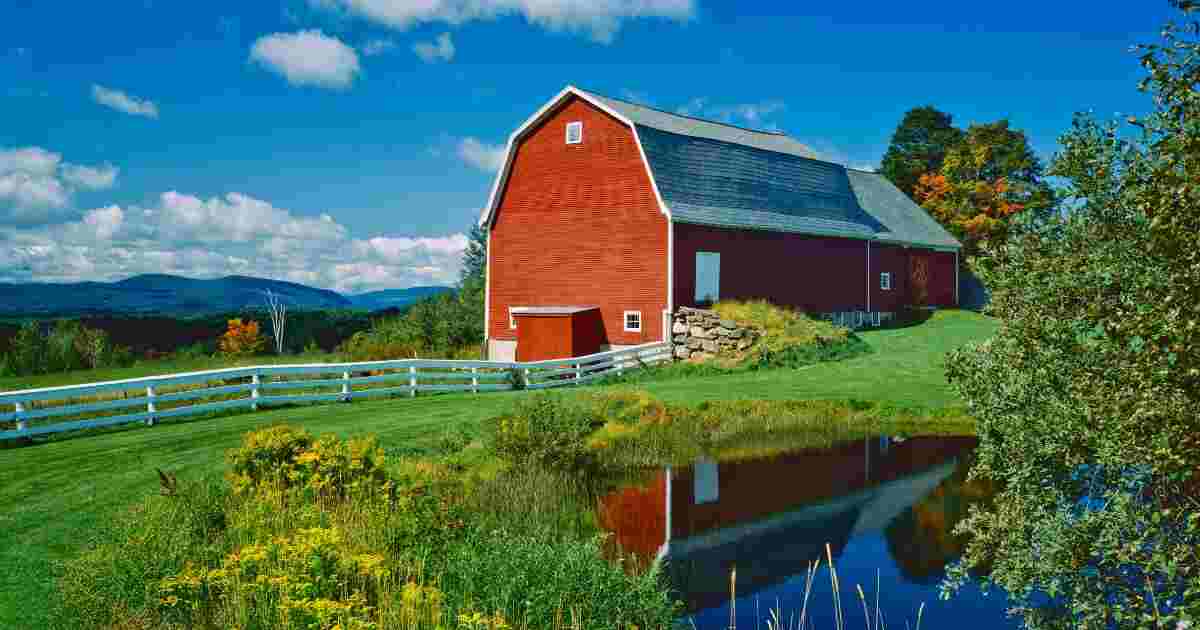
Walk out of a busy city centre and keep walking. At some point the office blocks give way to houses, the houses give way to fields, and the noise fades into quiet. Somewhere in that transition you crossed from urban to rural. Most people have a rough sense of what those words mean, but when a Geography exam asks you to define them precisely or explain their differences with examples, the answer needs to be sharper than “one has more buildings.” This guide gives you that sharper answer.
Urban refers to towns and cities with high population density, lots of buildings, industry, and infrastructure. Rural refers to the countryside with low population density, open land, farming, and fewer services. The key difference between urban and rural areas is population density, land use, and the types of services and industries present.
Difference Between Urban and Rural: Comparison Table
| Feature | Urban | Rural |
|---|---|---|
| Definition | Towns and cities with high population density | Countryside with low population density |
| Population density | High – many people per square kilometre | Low – few people per square kilometre |
| Land use | Buildings, roads, industry, housing | Farms, forests, open land, nature |
| Employment | Industry, services, finance, retail | Farming, forestry, tourism, quarrying |
| Services | Hospitals, schools, shops, transport | Limited services, often far apart |
| Transport | Extensive public transport networks | Limited public transport, car dependent |
| Environment | Built environment, pollution, noise | Natural environment, quieter, cleaner air |
| Examples | London, New York, Tokyo, Lagos | The Yorkshire Dales, rural Iowa, Scottish Highlands |
What Does Urban Mean?
Urban areas are towns and cities. They are characterised by high population density, meaning many people live in a relatively small area. Urban areas have extensive infrastructure – roads, railways, sewage systems, electricity grids – and a wide range of services including hospitals, schools, shopping centres, and entertainment venues.
Urban areas tend to be centres of economic activity. Most of a country’s industry, finance, retail, and professional services are concentrated in urban areas. This is why people have migrated from rural to urban areas throughout history and continue to do so today – cities offer more jobs, better services, and more opportunities.
Key features of urban areas:
- High population density – large numbers of people living close together
- Diverse land use – residential, commercial, industrial, and recreational zones
- Extensive services – hospitals, schools, universities, transport hubs
- Economic activity – wide range of industries and employment opportunities
- Infrastructure – well-developed roads, public transport, utilities
- Environmental challenges – air pollution, noise pollution, urban heat islands
What Does Rural Mean?
Rural areas are the countryside. They have low population density, meaning few people spread across a large area. The landscape is dominated by farmland, forests, rivers, and open spaces rather than buildings and roads. Rural economies traditionally depend on primary industries such as farming, fishing, forestry, and mining.
Rural areas often have limited services compared to urban areas. There may be only one school serving a wide area, one small shop in the nearest village, and public transport that runs infrequently or not at all. This is why car ownership is much higher in rural areas – without a car, accessing basic services can be very difficult.
Key features of rural areas:
- Low population density – small communities spread across large areas
- Agricultural land use – farming, forestry, and natural landscapes dominate
- Limited services – fewer schools, hospitals, and shops, often far away
- Primary industries – farming, fishing, forestry, tourism
- Natural environment – cleaner air, quieter, closer to nature
- Car dependency – public transport is limited so most people need a car
Example 1 – London vs the Cotswolds (UK):
London is one of the world’s most densely populated urban areas with over 9 million people, thousands of businesses, an extensive underground railway network, and every service imaginable. The Cotswolds, just two hours away, is a rural area of rolling farmland, small villages, and country lanes where the population is spread thinly and the nearest large hospital might be 30 minutes by car.
Example 2 – New York vs rural Montana (USA):
New York City has a population density of over 10,000 people per square kilometre in some boroughs. Montana, by contrast, has an average population density of around 2.7 people per square kilometre statewide – one of the lowest in the United States. The contrast illustrates just how extreme the difference between urban and rural can be within one country.
Example 3 – Urbanisation in Africa:
Lagos in Nigeria is one of the fastest growing urban areas in the world, with an estimated population of over 15 million. It has grown rapidly as people migrate from rural farming communities in search of work and better services. This movement of people from rural to urban areas is called urbanisation and it is one of the biggest geographical trends of the 21st century.
Example 4 – Rural tourism:
The Lake District in England and Yellowstone National Park in the USA are rural areas that have developed tourism as their main economic activity. Visitors come for the natural landscapes, hiking, and wildlife – things that urban areas cannot offer. This shows that rural areas are not simply “places without cities” but have their own distinct economic and cultural character.
Example 5 – Service provision:
In urban Birmingham, a person might have three hospitals within 10 kilometres, dozens of GP surgeries, and multiple schools to choose from. In a rural area of mid-Wales, the nearest hospital might be over an hour’s drive away and the local school might serve children from several surrounding villages. The difference in service provision is one of the most significant practical differences between urban and rural living.
The U and R trick:
Urban = Under roofs. Cities are full of buildings, roads, and rooftops. Everything is built up and covered over.
Rural = Roots and fields. The countryside is about what grows from the ground – crops, trees, grass. Nature rather than construction.
Or simply: urban sounds like “urbane” which means sophisticated and city-like. Rural sounds like “raw” – raw nature, raw landscape, untouched by the city.
Quick Quiz: Urban or Rural?
1. A place with high population density, offices, and an underground railway. This is:
2. A farming community with few services and limited public transport. This is:
3. People moving from the countryside to cities is called:
4. Which area typically has cleaner air and lower noise levels?
5. Which type of area is more likely to have farming as its main economic activity?
Difference Between Urban and Rural in Exams
The difference between urban and rural is a core topic in GCSE Geography. You need to be able to define both terms, give examples, describe land use and population density differences, explain the challenges faced in each type of area, and discuss urbanisation as a global trend. Case studies using specific real places will always strengthen exam answers. Knowing the names and key facts about specific urban and rural locations in the UK and around the world will take your answers from generic to genuinely impressive.
Common Mistakes to Avoid
Thinking rural means empty or unimportant:
Rural areas are economically vital. They produce the food that feeds urban populations, supply raw materials, and increasingly attract tourism. Describing rural areas simply as “places without cities” misses everything that makes them significant. In exam answers, always describe rural areas in terms of what they have rather than just what they lack.
Confusing suburban with rural:
Suburban areas sit between urban centres and the countryside. They are residential neighbourhoods on the edges of cities – housing estates, retail parks, and commuter towns. They are not rural. Rural areas are genuinely agricultural and sparsely populated. If you use suburban and rural interchangeably in an exam, you will lose marks.
Forgetting that urban and rural exist on a spectrum:
There is no sharp line between urban and rural. A small market town might be described as semi-rural. A village on the edge of a large city might be technically rural but feel almost urban. Geographers use terms like peri-urban and rural-urban fringe to describe the areas in between. Acknowledging this complexity in exam answers shows sophisticated geographical thinking.
Frequently Asked Questions
What is urbanisation and why does it happen?
Urbanisation is the process by which an increasing proportion of a country’s population lives in urban areas. It happens because cities offer more jobs, better services, higher wages, and more opportunities than rural areas. In developing countries, urbanisation is often driven by people leaving subsistence farming in rural areas to find work in city factories and service industries. More than half the world’s population now lives in urban areas, and this proportion is rising.
What is counter-urbanisation?
Counter-urbanisation is the opposite of urbanisation – it is the movement of people from urban areas back to rural areas. It typically happens in wealthier countries where people who can afford to move seek the quality of life benefits of the countryside while still accessing urban jobs, often by commuting or working remotely. The rise of remote working since 2020 has accelerated counter-urbanisation in many developed countries.
What challenges do rural areas face?
Rural areas face several significant challenges including declining populations as young people move to cities, closure of local services like post offices, schools, and bus routes due to falling demand, an ageing population as older residents stay while younger ones leave, limited economic opportunities beyond agriculture and tourism, and poor broadband and mobile connectivity in remote areas.
What challenges do urban areas face?
Urban areas face challenges including housing shortages and high house prices, traffic congestion and air pollution, pressure on services like schools and hospitals, social inequality between wealthy and deprived neighbourhoods, waste management, and the urban heat island effect where cities are significantly warmer than surrounding rural areas due to heat absorbed by buildings and roads.
Which countries are the most urbanised?
The most urbanised countries in the world include Singapore (almost entirely urban), Kuwait, Belgium, and Qatar where over 95% of the population lives in urban areas. The UK has an urbanisation rate of around 84%. By contrast, countries like Burundi, Papua New Guinea, and Niger have urbanisation rates below 25%, with most of their populations still living in rural areas.
For more Geography help visit National Geographic: Urban Areas.
Also read: Difference Between Weather and Climate | Difference Between Longitude and Latitude | Difference Between River and Lake
The difference between urban and rural shapes almost every aspect of how people live – from what jobs are available to how far away the nearest hospital is. Understanding the difference between urban and rural is not just useful for Geography exams. It helps you make sense of news about housing shortages, farming subsidies, and rural decline that you will encounter throughout your life. The difference between urban and rural is one of the most fundamental concepts in human geography.
Whether you grow up in a city or the countryside, understanding the difference between urban and rural gives you a framework for making sense of the world around you. Population growth, climate change, food security, and housing are all topics that connect directly back to the difference between urban and rural geography. The more confidently you can explain the difference between urban and rural, the stronger your answers will be across a wide range of Geography topics.
