Evaporation and boiling both turn liquid into gas, which is why students mix them up so often. They look similar on the surface. Both involve water disappearing into the air. But they are actually quite different processes that happen in different ways, at different temperatures, and in different parts of the liquid. The difference between evaporation and boiling is one of those topics that makes complete sense once someone explains it clearly. This guide does exactly that.
Evaporation happens slowly at the surface of a liquid at any temperature below boiling point. Only the fastest-moving molecules at the surface escape into the air. Boiling happens throughout the entire liquid at a specific temperature (100°C for water at sea level) when bubbles of gas form and rise to the surface. Evaporation is slow and quiet. Boiling is rapid and visible throughout the liquid.
Difference Between Evaporation and Boiling: Comparison Table
| Feature | Evaporation | Boiling |
|---|---|---|
| Where it happens | Only at the surface of the liquid | Throughout the entire liquid |
| Temperature | Any temperature below boiling point | At a specific boiling point (100°C for water) |
| Speed | Slow and gradual | Rapid |
| Bubbles | No bubbles formed | Bubbles form throughout the liquid |
| Energy needed | Lower energy, happens naturally | Requires sustained heat energy |
| Visible? | Not always visible | Clearly visible bubbling |
| Example | Puddles drying up after rain | Water bubbling in a kettle |
| Temperature of liquid | Liquid stays below boiling point | Liquid is at boiling point throughout |
What is Evaporation?
Evaporation is the process by which molecules at the surface of a liquid gain enough energy to escape into the air as a gas, at temperatures below the boiling point. It happens slowly and continuously whenever a liquid is exposed to the air.
Not all molecules in a liquid have the same amount of energy. At any given moment, some molecules are moving faster than others. The fastest-moving molecules at the surface occasionally have enough energy to break free from the forces holding the liquid together and escape into the air as individual gas molecules. This is evaporation.
Because only the highest-energy molecules escape, evaporation actually cools the liquid left behind. This is why sweating cools your body. The sweat on your skin evaporates, and the fastest-moving (hottest) molecules escape, leaving the cooler ones behind and dropping your skin temperature.
Key things to remember about evaporation:
- Happens at any temperature, not just at boiling point
- Only occurs at the surface of the liquid
- No bubbles are formed
- Happens slowly and gradually
- Increases in warmer temperatures, lower humidity, and with more surface area exposed
- Cools the liquid left behind
What is Boiling?
Boiling is the rapid conversion of a liquid to a gas that happens throughout the entire liquid when it reaches its boiling point. For water at sea level, this is 100°C. At this temperature, molecules throughout the liquid (not just at the surface) have enough energy to form bubbles of gas that rise to the surface and escape.
When water boils, you can see and hear it happening. Bubbles form at the bottom of the container where the heat source is, rise through the liquid, and burst at the surface. The temperature of boiling water stays at 100°C even if you increase the heat — the extra energy goes into converting liquid to gas rather than raising the temperature further.
Key things to remember about boiling:
- Only happens at the boiling point of the liquid
- Happens throughout the entire liquid, not just at the surface
- Produces visible bubbles throughout the liquid
- Is rapid and energetic
- Temperature stays constant at boiling point during the process
- Requires a continuous external heat source
Example 1 – Puddles after rain (Evaporation):
After it rains, puddles gradually disappear over the next few hours even though the temperature is nowhere near 100°C. This is evaporation. Water molecules at the surface of the puddle gain enough energy from the sun and air to escape into the atmosphere one by one. No bubbles, no boiling, just slow gradual disappearance.
Example 2 – A kettle boiling (Boiling):
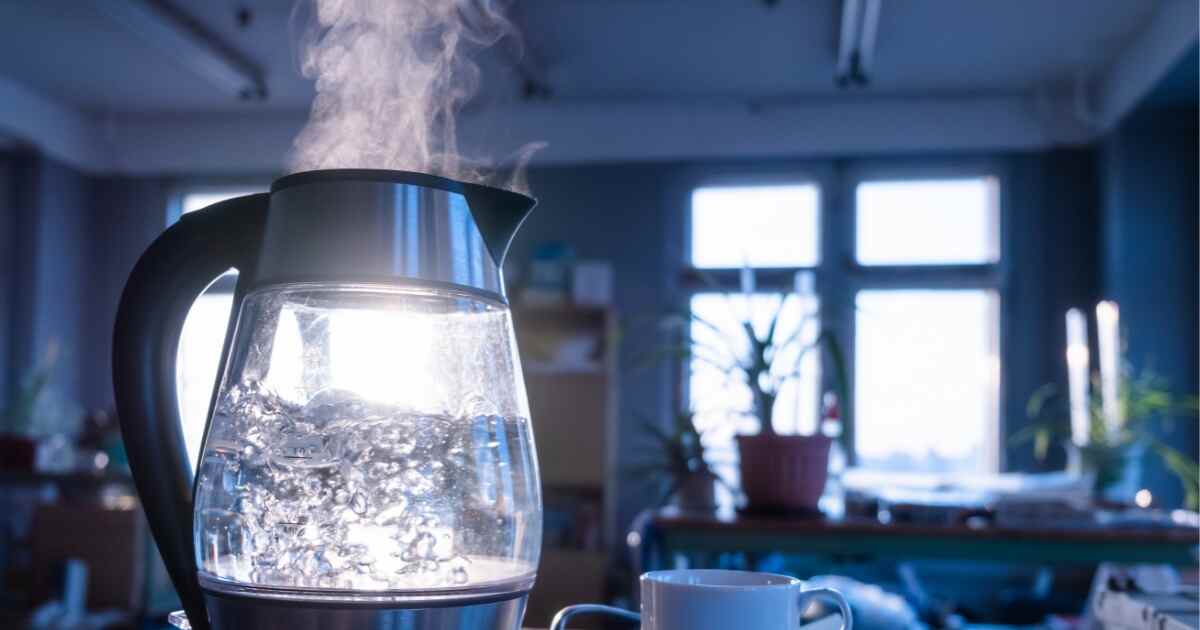
When you switch on a kettle, you can hear the water heating up before it boils. Once it reaches 100°C, bubbles form throughout the water, not just at the surface, and the kettle is visibly bubbling vigorously. This is boiling. The process is rapid, energetic, and requires continuous electrical energy to maintain.
Example 3 – Sweating (Evaporation):
When you exercise, your body produces sweat which sits on your skin. As the fastest-moving sweat molecules evaporate from the surface of your skin, they carry heat energy away with them, cooling you down. This is evaporation being used by your body as a natural cooling system. The sweat never reaches 100°C — it evaporates at body temperature.
Example 4 – Wet clothes drying (Evaporation):
Hanging wet clothes outside to dry works because water evaporates from the fabric into the air. This happens faster on warm, sunny, and windy days because higher temperature increases molecular energy, and wind removes the water vapour from near the surface preventing it from condensing back. No boiling involved at any point.
Example 5 – Cooking pasta (Boiling):
When you boil pasta, you fill a pot with water and heat it until bubbles form throughout the liquid and it reaches a rolling boil at 100°C. You need the water to be at boiling point to cook the pasta properly. Evaporation is also happening at the surface throughout, which is why the water level drops slightly during cooking, but the active cooking happens because of boiling.
The surface vs whole trick:
Evaporation = only at the Edge (surface). Think of the E in evaporation standing for Edge. Only surface molecules escape.
Boiling = the whole Body of liquid. Think of the B in boiling standing for the whole Body of water bubbling.
Or think of it this way: evaporation is like people quietly sneaking out of a building one at a time through a window. Boiling is like the whole building erupting at once through every exit. Same destination (outside/gas), very different process.
Quick Quiz: Evaporation or Boiling?
1. A puddle of water slowly disappears on a cool day. This is:
2. Water in a pot reaches 100°C and bubbles form throughout the liquid. This is:
3. Which process only happens at the surface of a liquid?
4. Sweat evaporating from your skin to cool you down is an example of:
5. Which process requires a liquid to reach a specific fixed temperature?
Difference Between Evaporation and Boiling in Exams
The difference between evaporation and boiling is a common topic in KS3 and GCSE Science. Exam questions typically ask you to explain where each process occurs, why evaporation happens below boiling point, why boiling produces bubbles while evaporation does not, and to give real world examples of each. Always mention that evaporation occurs at the surface only and that boiling occurs throughout the liquid. These two points are the ones most students miss and the ones examiners look for most.
Common Mistakes to Avoid
Thinking evaporation only happens in hot weather:
Evaporation happens at any temperature above absolute zero. It happens faster in warmer conditions, but water evaporates even on cold days. Clothes left outside on a cold dry day will still eventually dry because of evaporation.
Saying boiling and evaporation are the same process at different temperatures:
They are fundamentally different. Evaporation involves only surface molecules escaping individually. Boiling involves the entire liquid converting to gas with bubble formation throughout. The temperature difference is just one aspect of a broader difference in mechanism.
Forgetting that temperature stays constant during boiling:
A common exam question asks what happens to the temperature of water when it is boiling. The answer is that it stays constant at 100°C. Adding more heat does not raise the temperature further — it just speeds up the rate of boiling. The energy goes into breaking molecular bonds rather than raising temperature.
Frequently Asked Questions
Can evaporation happen at room temperature?
Yes. Evaporation happens at any temperature because at any temperature some molecules at the surface have enough energy to escape into the air. This is why a glass of water left on a table will slowly disappear over days even at room temperature of around 20°C. The rate of evaporation increases with temperature but it never stops entirely above absolute zero.
Why does water boil at a lower temperature on a mountain?
At higher altitudes, atmospheric pressure is lower. Molecules need less energy to escape the liquid into the lower pressure atmosphere, so water reaches its boiling point at a lower temperature. On top of Mount Everest, water boils at around 70°C rather than 100°C. This is why cooking times are longer at high altitude — the water is boiling but at a lower temperature than at sea level.
Why does evaporation cool a liquid down?
When the fastest-moving, highest-energy molecules escape from the surface during evaporation, the average energy of the molecules left behind decreases. Since temperature is a measure of average molecular energy, the temperature of the remaining liquid drops. This is why sweating cools you down, why you feel cold when you get out of a swimming pool, and why blowing on hot food makes it cool faster.
What is condensation and how does it relate to evaporation?
Condensation is the opposite of evaporation. It is the process by which water vapour in the air turns back into liquid water when it cools down. When warm moist air meets a cold surface like a window or a mirror in a bathroom, the water vapour loses energy and condenses back into liquid droplets. Evaporation and condensation are opposite processes in the water cycle.
Is steam from boiling water the same as water vapour from evaporation?
Steam and water vapour are both gaseous forms of water but they appear differently. Water vapour from evaporation is invisible — you cannot see individual water molecules in the air. The white cloud you see above boiling water is actually tiny droplets of liquid water that have condensed from steam as it meets cooler air. True steam, like water vapour, is actually invisible.
For more Science help visit Khan Academy: States of Matter.
Also read: Difference Between Mitosis and Meiosis | Difference Between Photosynthesis and Respiration | Difference Between Speed and Velocity
The difference between evaporation and boiling comes down to where it happens and at what temperature. Evaporation is quiet, slow, and happens only at the surface. Boiling is rapid, energetic, and happens throughout the liquid. Once you have that picture in your head, the difference between evaporation and boiling is impossible to forget. The difference between evaporation and boiling explains everything from why puddles disappear to why a kettle clicks off when the water is ready.
Once you truly understand the difference between evaporation and boiling, you start noticing it everywhere in daily life. Every time you see a puddle shrinking or a kettle bubbling, you are watching the difference between evaporation and boiling play out in real time. Keep connecting the science to what you see around you and the difference between evaporation and boiling will stay with you long after the exam is over.
